 enquiries@acsamelbourne.com.au
 1800736888
 +61418638273
Muay Thai
Why We Use Levels at ACSA — And Why Muay Thai Can’t Be Rushed
Feb
One of the biggest mistakes people make in Muay Thai has nothing to do with technique. It’s impatience. People want to progress quickly, move up fast, and feel like they’re improving all the time. That desire usually comes from a good place. Motivation is high. Energy is strong. But Muay Thai has a way of exposing impatience, and when people rush their development, it almost always shows up later.
Muay Thai isn’t just a collection of strikes or combinations. It’s a system built on balance, rhythm, timing, and decision-making under pressure. Those qualities can’t be forced. They’re developed layer by layer. When people skip steps, they don’t just miss information — they build holes into their game. Those holes might not be obvious early on, but they always appear when the pressure rises.
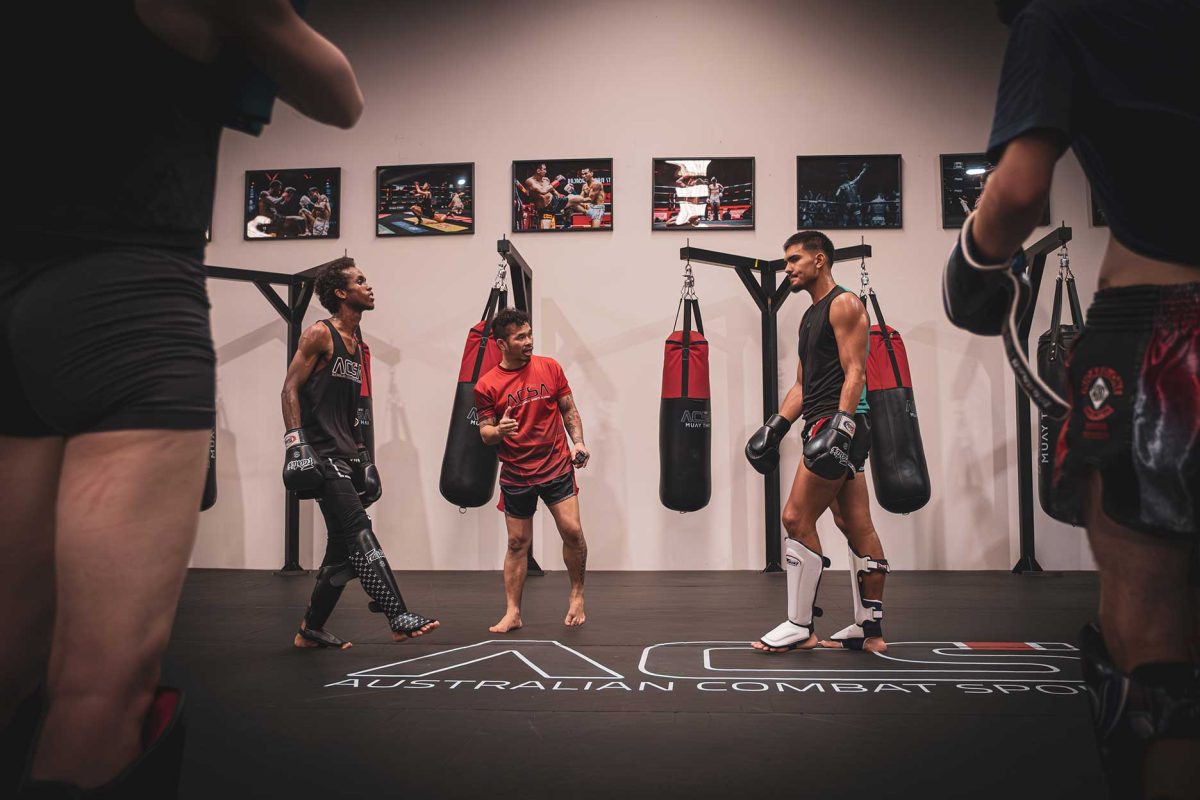
That’s why structure matters, and why we use a three-level class system at ACSA. The system is broken down into beginner, intermediate, and advanced levels, each designed to guide people through Muay Thai in a logical, progressive way. The goal isn’t to rush people through levels, but to make sure each stage prepares them properly for what comes next.
Traditionally, Muay Thai doesn’t have a grading system. In Thailand, progression is measured through experience, and that experience comes from fights. The more you fight, the more you’re exposed to timing, distance, pressure, and consequence. Fighters don’t move up because they’ve completed a syllabus. They move up because they’ve lived the art.
The reality, especially in the West, is that most people don’t want to fight — and that’s completely fine. People still want to learn Muay Thai properly. They want the authentic art. They want to understand how it works, how it feels, and how to apply it without ever stepping into a ring. Most people train Muay Thai for fitness, self-defence, and because it’s genuinely enjoyable. It stays fun because you’re constantly learning and constantly developing. You’re not just exercising — you’re building a skill over time. That’s where a structured system becomes essential.
Without structure, people tend to measure progress by intensity instead of understanding. They push harder instead of learning deeper. They chase exhaustion instead of skill. That’s why a three-level system works so well. It reflects how learning happens in any discipline. You start with the basics, then build understanding, and only after that do you refine your craft.
The first stage is where everything starts. This phase is about learning how to move, how to stay balanced, and how to remain calm while doing unfamiliar things. Techniques are introduced one at a time. Punches, kicks, knees, elbows, defence, and movement are all learned individually before they’re ever blended together. At this point, people don’t always understand why certain drills are repeated or why things are slowed down. That clarity comes later.
What matters first is efficiency and composure. Power is secondary. Sparring here is light, playful, and controlled. It’s not about winning exchanges. It’s about learning how to move without panic. This is also where students begin developing one of the most important concepts in Muay Thai, even if they don’t yet have a name for it — Jang Wa (จังหวะ).
Jang Wa is rhythm and timing. There’s the technique of throwing a kick, and then there’s knowing how to stay relaxed enough to throw it properly. At this stage, you’re learning how to kick, how to move, and how to stay loose rather than tense. Most people spend around three to six months here, and that time is critical. Rushing this phase almost always creates problems later.
As training progresses, things begin to connect — and they also become more challenging. This is where Jang Wa becomes clearer. You start to understand that landing a technique isn’t about throwing more combinations or being faster. It’s about recognising moments. Like a dancer who can follow the beat but also play with it, a fighter with developing Jang Wa can change rhythm without losing balance or control.
This is where the shift happens. Earlier on, you were learning how to throw a kick. Now you begin learning when to throw it, and why that moment matters.
This stage is also where many people drop off. Early progress felt fast because everything was new. Now improvements are smaller, more subtle, and take longer. You begin to realise just how many layers there are in Muay Thai, and that can feel overwhelming. It’s often the first time people truly see how deep the art goes.
At the same time, this is where the foundations of personal style begin to form. You start noticing what suits you. Maybe you’re more comfortable boxing, or maybe knees and pressure feel natural. Maybe you enjoy controlling distance and timing. These aren’t decisions you make once — they develop slowly, through consistent training.
At this stage, and really at all stages, consistency matters far more than intensity. That doesn’t mean training every day. It might mean training twice a week, consistently, over two years. Imagine how good you would get doing that. As a coach, I see so many people burn themselves out by trying to train six days a week, getting injured, then having to take time off. The cycle repeats for years, and progress ends up being slow. Meanwhile, the slow-burners who train twice a week over three years often become highly technical and very skilled. Real development comes from staying consistent.
Advanced training is where understanding turns into instinct. By this point, you should have a strong grasp of the different styles of Muay Thai — femur, muay mat, muay khao — and, more importantly, how to deal with them. It’s no longer enough to simply recognise a style. You need strategies to counter it, and you need to be able to implement those ideas in training and sparring, not just talk about them.
This is also where your own individual style becomes clearer. You begin shaping a game plan that fits your body, your strengths, and your personality. Training becomes less about collecting techniques and more about refining how you apply them under pressure.
At this level, Jang Wa is no longer something you think about. It’s something you feel. Timing, balance, and rhythm are ingrained. Movements are efficient. Decisions are calm. Many people training at this stage have five, ten, or more years of experience — and even then, the learning doesn’t stop.
What changes is perspective. You realise that Muay Thai isn’t something you ever finish. It becomes a lifelong practice — something that continues to challenge you, teach you, and develop you over time.
Each level exists to prepare you for the next. If you skip any stage, gaps form, and those gaps always show up under pressure. Muay Thai doesn’t reward shortcuts. It rewards patience, consistency, and time spent doing things properly.
If you take your time and trust the process, you build something solid. Something that lasts.
Next Grading Day: 7th March 2026

About Australian Combat Sports Academy
Australian Combat Sports Academy is Melbourne’s #1 destination for Muay Thai, Brazilian Jiu Jitsu and Mixed Martial Arts (MMA). Get started and book a free tour today!